

In electronic devices, Electrochemical Migration (ECM) is often called the "chronic disease" of reliability. It quietly corrodes circuitry until shorts, leakage, or even catastrophic burnout occur, and its impact is magnified under high temperature and humidity.
1. What is Electrochemical Migration (ECM)?
ECM is the field-driven transport of metal ions-copper, silver, tin, aluminum, etc.-from an anode to a cathode, where they are reduced and deposited as dendritic, conductive filaments. The process unfolds in three stages:
- Electrolysis of the anode metal into ions (e.g., Ag → Ag⁺) in the presence of moisture.
- Migration of these ions through the insulating medium under an applied electric field.
- Dendritic growth: the ions are reduced back to metal at the cathode, building tree-like pathways that can eventually bridge conductors.
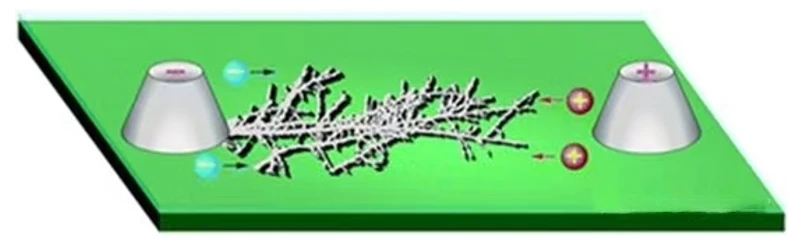
ECM is frequently observed during high-temperature, high-humidity, and biased reliability tests such as BHAST and H3TRB, and it is especially problematic in fine-pitch packages like BGA and CSP, where the small solder-ball spacing makes short circuits more likely.
2. Conditions that promote ECM
- Humidity: RH > 80 % forms an adsorbed water film that acts as an electrolyte and accelerates ion transport.
-Voltage differential: A DC bias between conductors (e.g., between adjacent solder joints on a PCB) strengthens the electric field and the driving force for migration.
- Ionic contamination: Residual flux, dust, or other contaminants provide the conductive medium necessary for ECM.
5. Preventive measures: breaking the "survival chain" of ECM
- Environmental control
– Reduce humidity through conformal coatings or potting compounds.
– Maintain storage conditions below 60 % RH.
- Design optimization
– Increase conductor spacing and minimize micro-cracks in glass-fiber laminates (addressing CAF).
– Avoid large DC voltage differences between adjacent conductors.
– Select CAF-resistant PCB materials.
- Process improvements
– Enhance cleaning to eliminate ionic residues.
– Improve soldering quality to prevent micro-cracks.
- Material selection
– Use low-moisture-absorption substrates and metal finishes that resist ion migration.
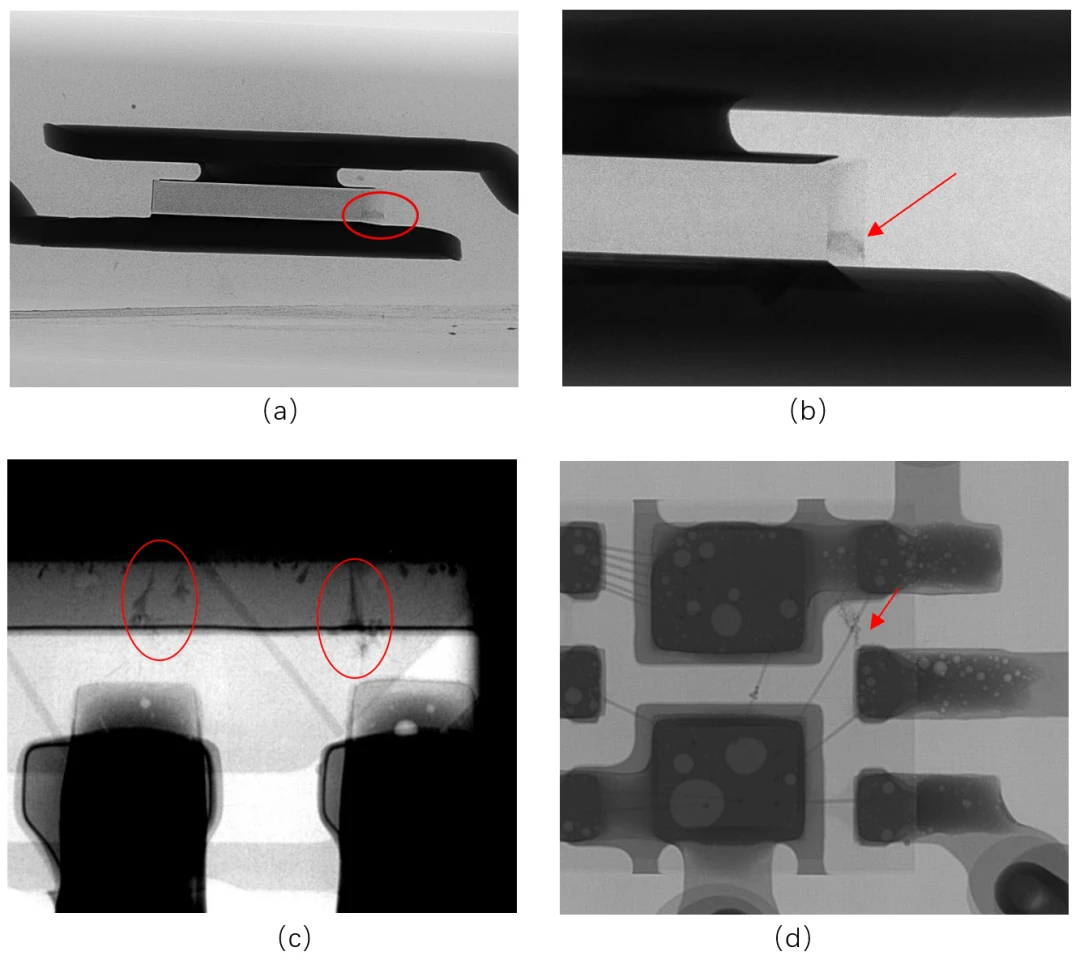
GRGTEST is one of China's most comprehensive and recognized listed third-party testing laboratories for semiconductor integrated circuits. Focused on the domestic need for high-power, high-speed, high-integration, and high-computing advanced semiconductors and ultra-large-scale ICs, GRGTEST delivers professional quality evaluation and reliability-enhancement services across the entire semiconductor supply chain.