

Various types of antennas, as core components of wireless communication systems, have performance that directly impacts signal coverage, communication capacity, and network reliability. With the rapid advancement of technologies such as 5G,6G, the Internet of Everything, intelligent connected vehicles, and aerospace/satellite networks, antenna systems have evolved from simple, single-function devices into complex systems encompassing general-purpose communication antennas, base station antennas, indoor signal distribution system antennas, smart antennas, and specialized application-specific antennas.
Antenna performance testing is a critical step in ensuring communication link quality, suppressing electromagnetic interference, and complying with radio frequency regulatory requirements; its testing accuracy directly impacts the operational effectiveness of systems such as mobile communications, satellite navigation, radar equipment, and emergency communications systems – and it plays a vital role in determining both the user experience of the equipment and the safety of the equipment itself, as well as that of personnel and property.
Current antenna testing services often face challenges such as narrow test frequency band coverage, fragmented resource allocation, and a lack of integrated wide-band testing capabilities; additionally, existing internal enterprise testing platforms suffer from inadequate frequency band coverage, while the cost of upgrading these platforms remains prohibitively high. Leveraging its specialized microwave and RF technical team and integrating both internal and external software and hardware resources, GRGTEST has established two standardized antenna testing anechoic chamber platforms. These platforms provide comprehensive third-party testing services covering both near-field and far-field measurements for antennas across the entire frequency range of 50 MHz to 110 GHz, fully meeting the diverse testing requirements for antenna R&D, finalization, and mass production validation.

Antenna Testing Principles and Test Items
An antenna is fundamentally a device for energy conversion between guided waves and electromagnetic waves in free space; its transmit–receive characteristics comply with the electromagnetic reciprocity theorem. Testing involves bidirectional acquisition of radiation signal amplitude and phase at both the transmit and receive ends, followed by the calculation of various antenna performance parameters. The industry predominantly employs two types of testing methodologies: near-field and far-field testing.
(1) Near-field testing
In the near-field region (which includes both the induced near-field and the radiated near-field; the distance is typically <(2D²)/λ, where D denotes the maximum antenna size and λ represents the wavelength), a high-precision probe is used to scan the surface of the antenna under test (AUT-Antenna Under Test) – whether it is planar, cylindrical, or spherical – to acquire its amplitude and phase measurements; subsequently, the far-field radiation characteristics are calculated using a near–far-field transformation algorithm (based on Fourier transform or mode expansion theory, derived from the Huygens–Kirchhoff diffraction principle). The probe position must be strictly controlled (sampling interval ≤ λ/2), and the probe response must be calibrated. The schematic diagram of the antenna near-field testing procedure is shown in Figure 1 below.
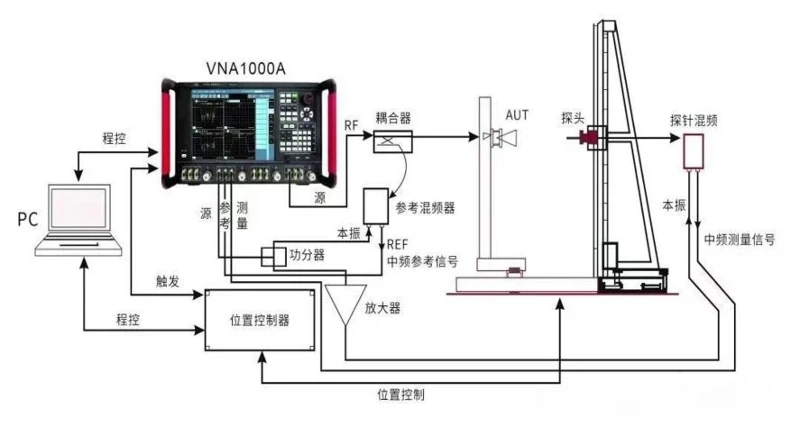
Figure 1. Antenna near-field measurement schematic diagram
(2) Far-field testing
In regions satisfying the far-field condition (typically when R> (2D²)/λ, where D is the maximum antenna size and λ is the wavelength), a reference antenna with known gain is used to transmit an approximate plane wave; the under-test antenna (AUT) then receives or radiates this wave. By measuring the transmission coefficient (e.g., S₂₁) and rotating the AUT, the radiation pattern, gain, and other parameters are obtained. The requirements are that the electric and magnetic fields be orthogonal, the wave impedance be equal to the free-space impedance (377 Ω), and the phase vary uniformly with distance. The schematic diagram of the antenna far-field test is shown in Figure 2.
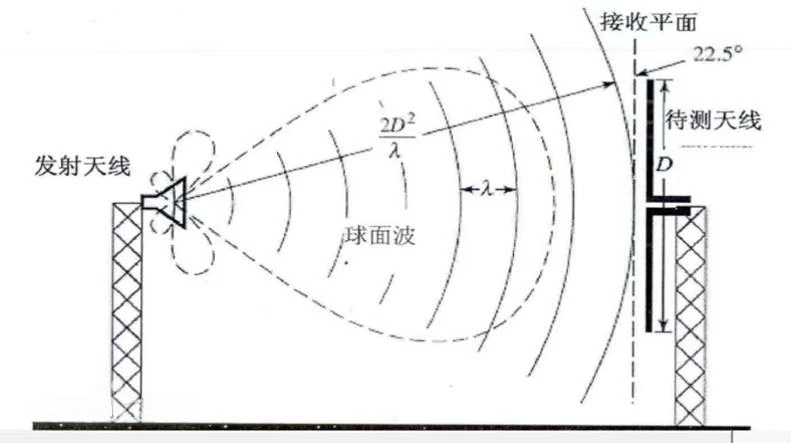
Figure 2. Antenna far-field measurement schematic diagram
(3) Main difference between near-field and far-field testing
Far-field testing directly reflects the actual operating conditions but requires a large workspace (e.g., a large microwave anechoic chamber); near-field testing can be performed within a compact anechoic chamber and is suitable for large or complex antennas, though it relies on high-precision phase measurement and sophisticated data processing. Both methods are based on the antenna reciprocity theorem and enable the measurement of both transmit and receive characteristics. A near-field testing system comprises a scanning frame, a vector network analyzer (VNA), an absorbing anechoic chamber, and specialized software; the far-field testing system requires sufficient distance (or a compact field reflector to simulate a plane wave) along with a turntable. The appropriate choice depends on factors such as frequency, antenna size, required accuracy, and site constraints.
Distinguishing based on practical application:
Near-field antenna testing is suitable for applications such as NFC card swiping, RFID systems, and wireless charging – scenarios that involve short distances with strong coupling but require high safety.
Antenna far-field testing is primarily used in scenarios where radiated waves are required for long-range, wide-area coverage-such as mobile phone communications, base stations, Wi-Fi, radar, and satellite systems.
(4) Testing instruments and equipment used for antenna testing
Antenna testing requires the use of a professional measurement equipment system (including the corresponding software and hardware systems); core instruments include vector network analyzers (VNA), antenna test anechoic chambers, spectrum analyzers, and wireless comprehensive test equipment.
GRGTEST Antenna Testing Technology Platform and Service Capability
(1) 650 MHz–18 GHz Wide-Band Antenna Testing Platform
This test platform is a medium-to-large-scale microwave anechoic chamber; its test equipment system and associated instrumentation support both far-field and near-field testing. The service capabilities are as follows:
1. Frequency band range: 650 MHz–18 GHz,
2. AUT dimensions: 300 cm × 300 cm × 250 cm;
3. Performance Specifications:
⑴ gain ,
⑵directional diagram;
(3) Side lobe and power beam width;
⑷input impedence;
⑸reflection coefficient;
⑹ return loss ;
⑺ voltage standing-wave ratio ;
(8) Effective electrical length and effective area;
⑼ Polarization mode;
⑽antenna bandwidth;
⑾ Port isolation;
⑿insulation resistance;
⒀……
4. Target Beneficiaries:
Manufacturers and research institutions that require outsourcing of antenna testing to third-party testing agencies; research institutions and manufacturers engaged in the R&D and production of system and equipment integration solutions; as well as antenna traders.
(2) 50 MHz–110 GHz Wide-Band Antenna Testing Platform
This test platform is a large-scale microwave anechoic chamber; its test equipment system and associated instruments and meters support both far-field and near-field testing. The service capabilities are as follows:
1. Frequency range: 50 MHz–110 GHz,
2. AUT dimensions: 300 cm × 300 cm × 250 cm;
3. Performance Specifications:
⑴ gain ,
⑵directional diagram;
(3) Side lobe and power beam width;
⑷input impedence;
⑸reflection coefficient;
⑹ return loss ;
⑺ voltage standing-wave ratio ;
(8) Effective electrical length and effective area;
⑼ Polarization mode;
⑽antenna bandwidth;
⑾ Port isolation;
⑿insulation resistance;
⒀……
4. Target Beneficiaries:
Manufacturers and research institutions that require outsourcing of antenna testing to third-party testing agencies; research institutions and manufacturers engaged in the R&D and production of system and equipment integration solutions; as well as antenna traders.
Relevant technical standards and specifications
The entire GRGTEST testing process strictly complies with international, domestic, industry, and military standards; customer-specified test specifications or customized test outlines are given priority. The mainstream applicable standards are as follows:
- International standards: ITU-R SM.329, ITU-R F.1336, ETSI EN 302502, ISO 9227;
- Telecommunications industry standards: 3GPP TS 37.145 (MIMO OTA testing), YD/T 1059, YD/T 2925;
- National Standard: GB/T 9410 "Measuring Methods for Radio Transmitter Equipment";
- JG Standard: GJB 7869 (Specification for Severity Levels of Environmental Test Conditions for Antennas).
- The relevant standards or test outlines specified by the client also serve as the preferred reference standards upon which our company relies.
Test Result Evaluation Criteria and Specifications
GRGTEST employs a tiered evaluation framework (Excellent, Good, Meets Requirements, Does Not Meet Requirements) to assess antenna performance; an example using individual performance indicators is briefly explained below:
- For premium-grade products, the VSWR shall be ≤1.5, the gain deviation shall be less than ±0.5 dB, and the directivity non-circularity shall be ≤2 dB.
- For qualified products, the VSWR shall be ≤ 2.0, with gain deviation within ±1.0 dB.
- The intelligent antenna must ensure that the beam switching delay is <5 ms and the beam pointing error is ≤3°.
- The mechanical downtilt angle adjustment accuracy for base station antennas shall be ±0.5°, and the wind load resistance capability shall be no less than 150 km/h.
- After environmental testing, all electrical parameter variations shall be kept within ±10% of the initial value, and the insulation resistance shall remain ≥100 MΩ.
- The test report shall clearly specify key parameters such as the standing wave ratio curve and the side lobe level of the critical frequency point's radiation pattern; for any non-conformities, it shall include corrective action recommendations, such as "restricted frequency band" or "structural reinforcement."
special explanation:
The GRGTEST evaluation criteria for test results shall primarily be based on the criteria specified in the relevant standards or test outlines provided by the customer.