

The 2025 Nobel Prize in Chemistry was awarded to scientists for their groundbreaking contributions to the pioneering research on Metal-Organic Frameworks (MOFs), marking the official entry of these revolutionary materials, often hailed as "Molecular Sponges", into the core stage of technological innovation. MOFs are crystalline porous materials formed by the molecular self-assembly of metal ions/clusters and organic ligands. Their unique "programmable" is driving paradigm shifts in fields such as energy, environment, and healthcare.
Core Performance Characteristics of MOFs
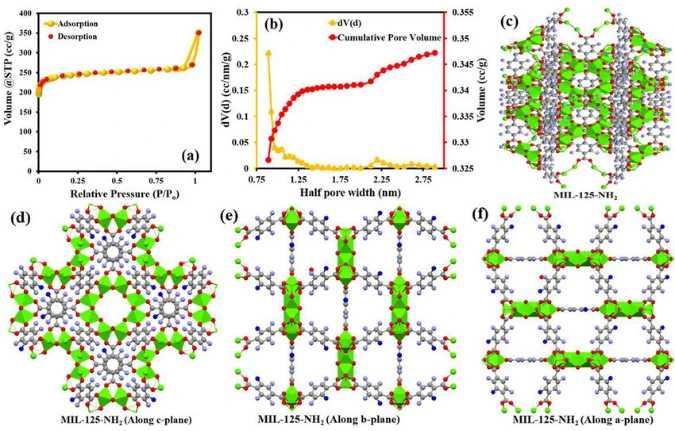
Ultra-High Specific Surface Area
The internal pores of a single gram of MOF material can be unfolded to cover an area of 7,800 m² (equivalent to a football field), providing immense space for gas adsorption.
Supported by: BET Specific Surface Area Analysis (N₂/CO₂ Adsorption, 77K-298K)²
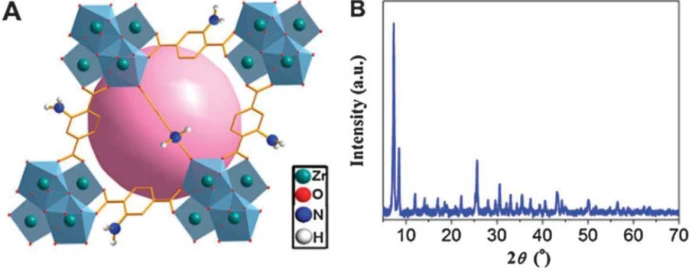
Precisely Programmable Structure
Metal nodes and organic ligands assemble freely like "Molecular LEGO®", enabling pore size customization within the range of 0.5 - 9.8 nm.
Supported by: XRD Crystal Structure Analysis + Small-Angle X-Ray Scattering (SAXS)³
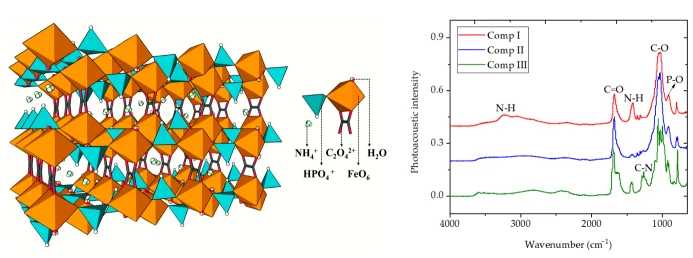
Intelligent Breathing Effect
Pores can dynamically expand by up to 40% (e.g., MIL-53 upon CO₂ adsorption), enabling molecular-level intelligent capture.
Supported by: In-situ XRD/FTIR + High-Pressure Adsorption Analysis⁴
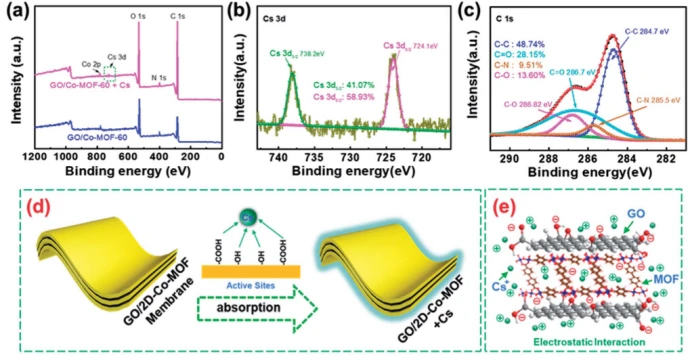
High Density of Active Sites
Surface distribution of 3-5 active sites per square nanometer (10 times greater than traditional catalysts), driving highly efficient catalysis.
Supported by: XPS Valence State Analysis + BET Adsorption Analysis⁵
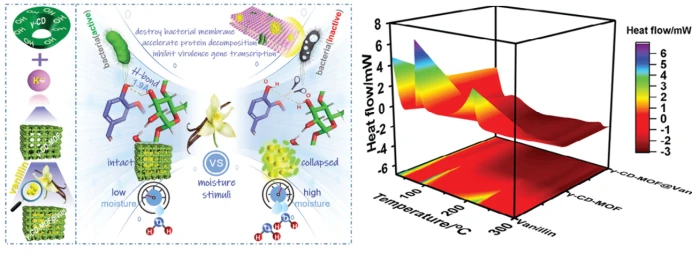
Thermal Stability Challenge
Potential structural collapse within 5 minutes under moisture exposure (e.g., MOF-5), necessitating rigorous stability validation⁶.
Supported by: TGA/DSC (Humidity Control) + In-situ XRD
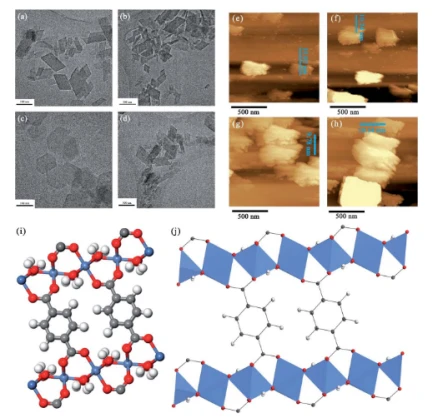
Atomic-Level Dispersion
Metal cluster spacing is as small as 1.2 nm, determining catalytic selectivity.
Supported by: HAADF-STEM + Electron Diffraction⁷
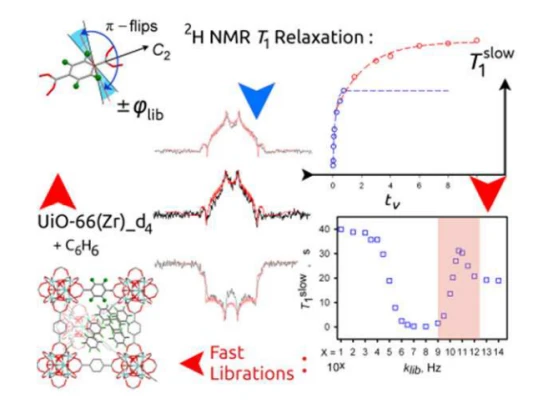
Drug Loading Capacity
Single particle drug loading capacity reaches 48 wt%⁸.
Supported by: NMR + Molecular Relaxation Time Analysis
GRGTEST Service Capabilities
As a key characterization partner for MOF R&D and application, we provide full-cycle testing solutions, covering the core performance validation highlighted in the Nobel Prize-winning achievements:
- Structure Verification: XRD/SAXS for crystal structure analysis, ensuring precise assembly of "Molecular LEGO®" (e.g., 0.5-9.8 nm pore size customization); aligning with the precise control of topology inherent to Reticular Chemistry design principles.
- Performance Decoding: BET adsorption for quantifying ultra-high specific surface area (up to 7,800 m²/g); In-situ FTIR/XRD for capturing the intelligent "Breathing Effect", analyzing structural dynamics during adsorption-desorption processes.
- Stability Assurance: Humidity-controlled TGA/DSC for evaluating thermal stability (addressing the moisture collapse challenge of MOF-5).
- Active Site Mapping: XPS for revealing subtle changes in element valence states and chemical bond energy, providing evidence of stable chemical structures; HAADF-STEM for verifying atomic-level dispersion (1.2 nm metal cluster spacing).
- Application Validation: NMR for analyzing drug loading (48 wt% capacity) and molecular relaxation kinetics for optimizing release efficiency.
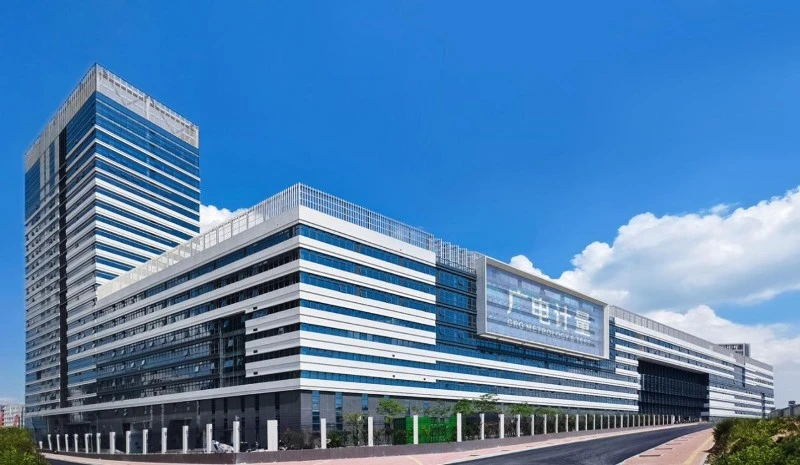
From laboratory breakthroughs to industrial implementation, GRGTEST, with its ISO 17025 accredited platforms and academician-led teams, provides comprehensive support for MOF materials:
✅ Multi-Scale Characterization (Atomic → Micron Level)
✅ Extreme Condition Simulation (-196°C ~ 1500°C, Humidity 0-95% RH)
✅ Full Industry-Academia-Research Chain Support (Synthesis Optimization → Performance Verification → Failure Analysis)