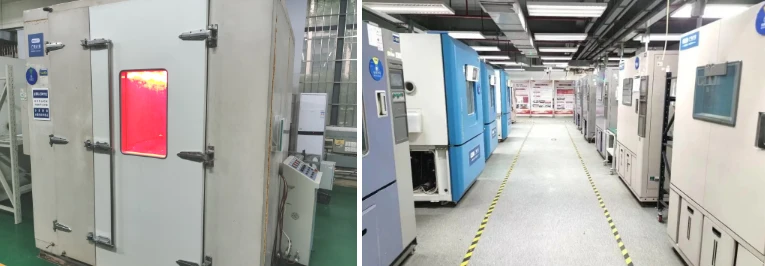
MIL-STD-810 is a series of U.S. Department of Defense environmental engineering standards designed to verify the performance and reliability of military equipment under extreme conditions. The 2000-release version, MIL-STD-810F, specifies systematic test requirements for equipment adaptability in complex environments involving temperature, humidity, and pressure. As military equipment is increasingly deployed in diverse settings (e.g., plateaus, deep sea, tropical rainforests), high/low pressure and temperature-humidity testing have become essential for evaluating environmental endurance.
Test Items and Technical Requirements
Key test items in MIL-STD-810F include:
Low Pressure Test
- Simulates high-altitude or high-air environments (e.g., above 15,000 meters).
- Pressure range: 1 kPa to standard atmospheric pressure (101.3 kPa).
- Evaluates sealing, material expansion, lubrication, and electronic heat dissipation.
High Pressure Test
- Simulates deep-sea or pressurized cabin conditions.
- Tests structural deformation and sealing under elevated pressure.
Temperature-Humidity Combined Test
- High Temp/Humidity: -55°C to +85°C, RH ≥95%, accelerates aging, corrosion, and short-circuit testing.
- Low Temp/Dry: Down to -62°C, checks material brittleness, lubricant solidification, and battery performance.
- Thermal Cycling: Rapid temperature changes (e.g., 15°C/min) induce thermal stress to detect connection failures.
Applicability
The standard applies to military and high-reliability civilian equipment exposed to extreme environments, including:
- Military: comms devices, avionics, vehicle weapon systems, personal gear.
- Civilian: aerospace equipment, polar research instruments, outdoor基站, new energy vehicle batteries.
Test Cycle and Process
- Duration: Single tests range from 4–8 hours (low pressure) to days or weeks (humidity cycling). Full combined tests typically take 2–4 weeks.
- Key steps: preconditioning, test execution, in-process monitoring, recovery, and final inspection.
Importance
- Identifies design flaws in materials, sealing, or thermal management.
- Ensures mission success by reducing failure risks in extreme conditions.
- Extends service life by predicting long-term aging.
- Meets regulatory and contractual requirements for defense and high-end civilian markets.
MIL-STD-810F testing is a core method for validating environmental adaptability. With growing extreme-environment applications, it drives advances in materials, sealing, and thermal design. Future integration with smart testing and multi-physics simulation will further enhance equipment survivability.
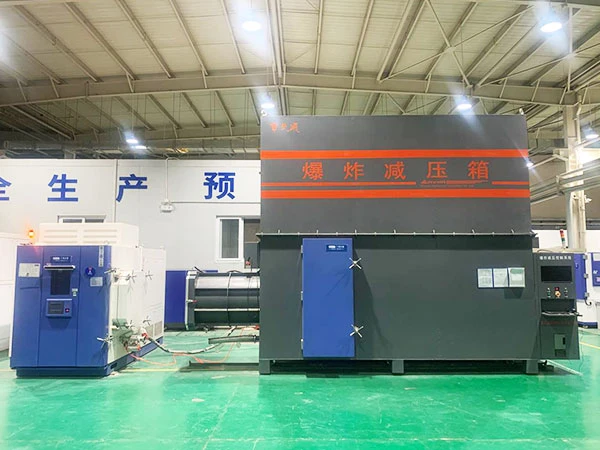
GRGTEST possesses large-scale environmental chambers (1200m³) and combined temperature-humidity-vibration test systems, including North China's first rapid decompression chamber, supporting climate resistance testing for aviation, aerospace, electronics, defense, and industrial sectors.