

Mechanical properties testing evaluates whether a product's outer shell can withstand abnormal forces encountered during assembly and everyday use. By simulating pressing, bending, and stepping loads, this test reveals weaknesses in casing design before products reach customers. GRGTEST provides comprehensive mechanical durability assessment across multiple industries.
What Is Mechanical Properties Testing?
During production line assembly and actual use, products may encounter unexpected external forces that cause the outer shell to deform or crack. These forces can also compress internal components and damage their connections to the circuit board. Mechanical properties testing is an environmental test that simulates various mechanical loads a product might experience, assessing whether the casing strength is sufficient to withstand such forces.
The test applies controlled mechanical stress - including pressing, elbowing, and stepping - to the product casing. Engineers then evaluate the extent of deformation, cracking, or internal damage to determine whether the design meets durability requirements.
Why Mechanical Properties Testing Matters
Product casings serve as the first line of defense against physical damage. When a casing fails under mechanical stress, internal components become vulnerable. This can lead to product malfunction, safety hazards, and warranty claims. Mechanical properties testing provides a structured way to verify casing strength before mass production, reducing the risk of field failures and costly recalls.
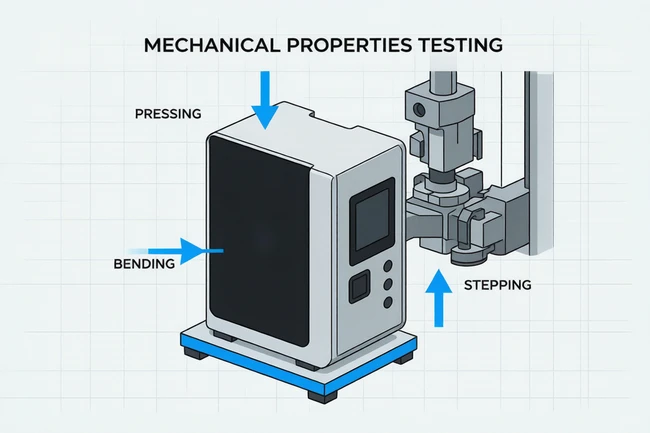
Figure 1: Mechanical properties testing applies controlled forces to assess product casing durability.
Applicable Standards and Testing Scope
GRGTEST mechanical properties testing follows industry standards including GMW 3172, QJ/GAC 1523.028, and Q/BAIC C220024. The service scope covers a wide range of product categories:
- Automotive parts and components
- Power tools
- Home appliances
- Information technology equipment
- Medical equipment
- Power supply equipment
- Wireless products
- Electrical accessories
The typical testing cycle is 1 to 2 working days, making it a fast-turnaround assessment for product development teams working on tight schedules.
How the Test Works
The testing process begins with securing the product in a test fixture. Controlled forces are then applied to specific points on the casing, simulating real-world scenarios such as a technician pressing on the enclosure during assembly or a user accidentally stepping on the device. The test parameters - including force magnitude, application point, and duration - are defined by the applicable standard and the product specification.
After testing, engineers inspect the casing for visible deformation, cracks, or fractures. They also check whether internal components have shifted or sustained damage. The results provide a basis for improving product quality and casing design.
GRGTEST Capabilities
GRGTEST is a nationally recognized professional third-party testing organization providing one-stop services. The Environmental and Reliability Testing Center operates 20 laboratories nationwide with a professional multidisciplinary expert team and advanced testing equipment. Laboratories hold CMA and CNAS accreditations and implement a nationwide integrated management model. GRGTEST has obtained certification and accreditation from nearly 50 domestic automotive OEMs, reflecting its extensive experience in environmental and reliability testing for the automotive industry.
Our Certificate


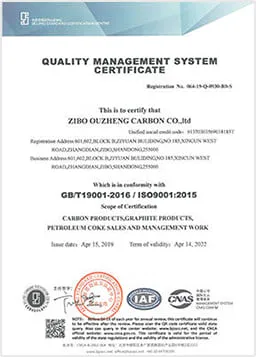

nationally recognized professional third-party testing organization
GRGTEST is a nationally recognized GRGTEST is a nationally recognized professional third-party testing organization providing one-stop services. providing one-stop services. . GRGTEST provides comprehensive mechanical durability assessment across multiple industries.