

Services Offered
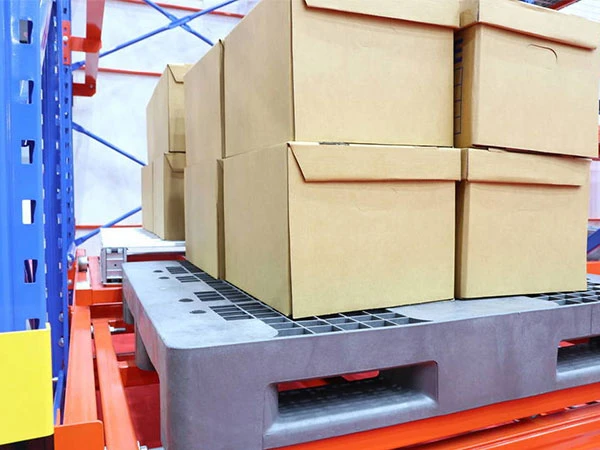
With the development of modern logistics and the packaging industry, packaging stacking stress testing has become an essential test. GRGTEST stacking stress testing simulates the pressure and vibration experienced by goods during transportation and storage, thereby evaluating the reliability and durability of packaging materials and stacking structures.
Scope of Services
Storage pallets or packaging materials, cartons, etc. for transportation
Testing Standards
GB/T 4857.3-2008 "Packaging - Basic Tests for Transport Packages - Part 3: Static Load Stacking Test Method"
GB/T 5398-1999 "Test Methods for Large Transport Packages"
ISO 2234:2000 "Complete, Filled Transport Packages - Static Load Stacking Test Method"
ISO 12048:2001 "Compression and Stacking Tests of Fully Filled Transport Packages Using a Compression Testing Machine"
GB/T4857.4 "Packaging - Basic Tests for Transport Packages - Part 4: Compression and Stacking Tests Using a Compression Testing Machine"
ASTM D642 "Tests for Determination of Compressive Strength and Unit Load of Containers and Components"
Test Items
1. Static Stacking Test
The static stacking test refers to stacking a certain number of packages or goods to a specified height within a fixed time period, without additional vibration or shock during the test. 1. **Stacking Test:** After the test, the collapse of the stack and the extent of damage to the packaging materials can be checked.
2. Dynamic Stacking Test
Dynamic stacking test involves stacking a certain number of boxes or goods to a specified height within a certain time period, simulating vibrations and shocks during transportation. After the test, the collapse of the stack and the extent of damage to the packaging materials can be checked.
3. Vibration Test
This involves applying vibrations of different frequencies and intensities to stacked boxes or goods during simulated transportation to test the stability and reliability of the packaging materials and stacking structure. Vibration tests are typically divided into low-frequency vibration and high-frequency vibration tests.
4. Temperature Test
Temperature test involves stacking a certain number of boxes or goods to a specified height within a certain time period, while controlling the ambient temperature. After the test, the collapse of the stack, the extent of damage to the packaging materials, and the changes in packaging materials and goods at different temperatures can be checked.
Relevant Qualifications
CNAS Accredited, CMA Accredited
Testing Cycle
Typical 3-5 working days
Service Background
The length of storage time and different temperature and humidity conditions affect the compressive strength of cardboard boxes. With prolonged storage, cardboard boxes will experience creep, leading to a decrease in strength. Excessive load can cause significant deformation, forcing the contents to bear direct external pressure. Over time, this can affect the product's performance and even cause damage.
Our Advantages
GRGTEST has 17 reliability and environmental laboratories nationwide. In the field of environmental and reliability testing, GRGTEST possesses the technical capabilities to conduct professional environmental reliability tests, including equipment six-performance design and analysis, equipment performance testing and failure analysis, competitive testing, reliability testing analysis, comprehensive environmental testing, mechanical environmental testing, climatic environmental testing, whole vehicle environmental testing, structural mechanics simulation analysis, and material process analysis and evaluation. We have conducted these tests for domestic and international airworthiness organizations such as EASA, FAA, and CAAC.
Hot Tags: stack compression test, China stack compression test service provider, test equipment for mechanical environmental reliability, environmental stress test, comprehensive testing, standardized testing, drop test, impedance testing


